One Control Framework for Many Standards
Every new regulation arrives as a new rulebook. It doesn't have to.
The problem
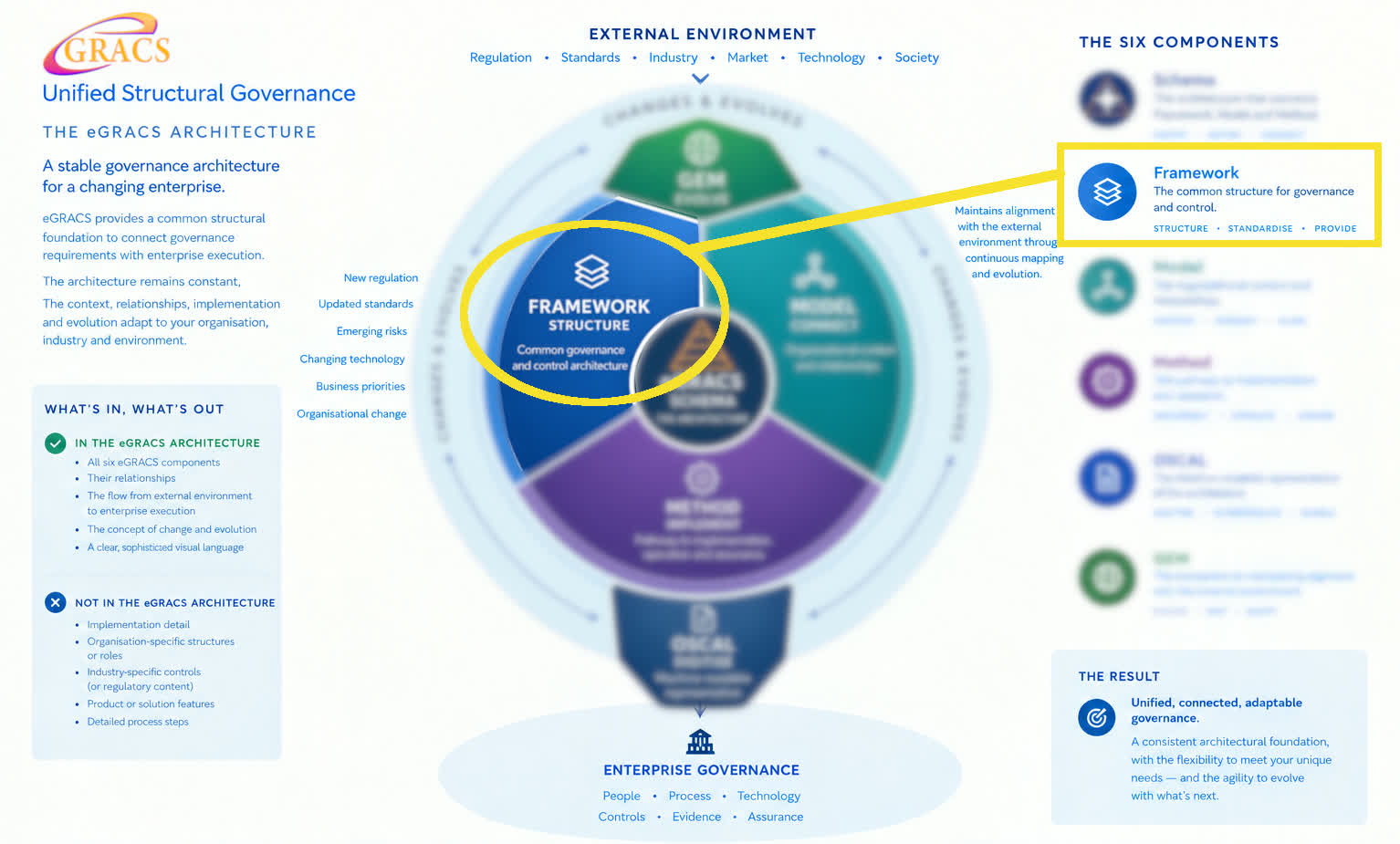
Each new standard usually brings its own controls, owners, evidence and reviews, and none of it talks to what came before. Over time the organisation is governed by a pile of disconnected rulebooks rather than one coherent structure.
How it works
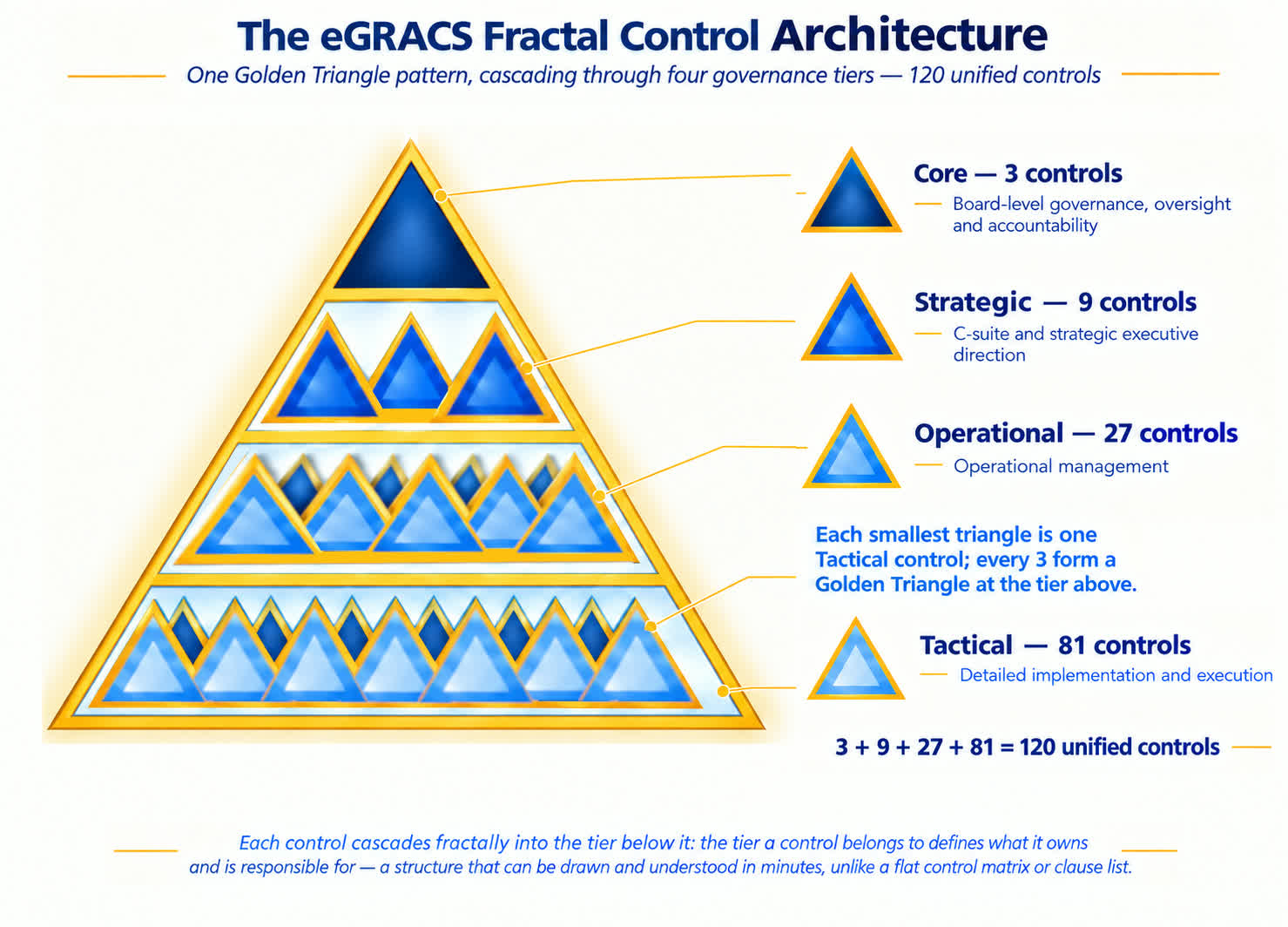
- One structure. 120 unified controls, organised across four governance tiers (Core, Strategic, Operational, Tactical) and three domains (Manage Demand, Deliver Solution, Manage Capability).
- Requirements relate to controls. Requirements from different standards, such as ISO/IEC 27001, NIST CSF, COBIT, ITIL, PCI DSS or GDPR, can be related to the same controls. They don't become identical, but there is one place to look.
- A pattern you can draw. The controls expand in a repeating pattern: 3, then 9, then 27, then 81. The whole architecture can be sketched on a whiteboard.
What it looks like in practice
Illustrative, not a case study.
Instead of keeping a separate control set, owner and evidence trail for every regulation, an organisation relates each requirement to the same Framework. One control can address several requirements, so the organisation can see where they overlap and where gaps remain.
Who it's for
CISOs, risk leads and audit leads evaluating a more coherent approach, and anyone who has been asked "what does our control environment actually look like?" and struggled to answer.
What it isn't
- Not a replacement for the standards you already follow. They stay authoritative.
- Not a ceiling. The 120 controls are a reference baseline, and enterprise-specific controls can be added through a Model without changing the Framework.
- Not a compliance verdict. A mapping is a relationship, not proof.
No registration required. Instant download.